
Sealing
Sealing works. Sealing every year does not.
A sealer is a thin protective coat that slows oxidation and stops water reaching the cracks. Applied every three to four years on a sound driveway it is the cheapest maintenance in this trade. Applied annually, or applied to a driveway that is already failing, it is money spent on appearance.
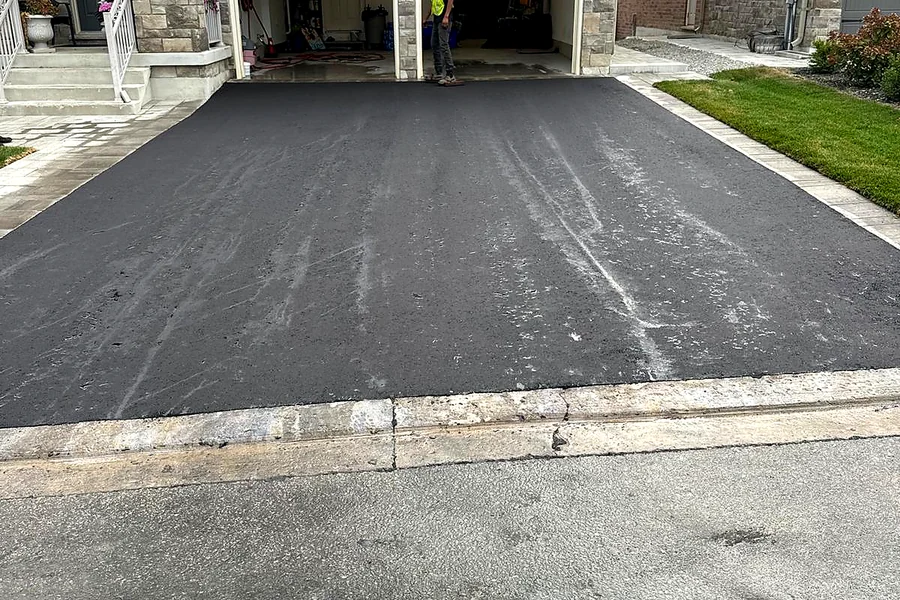
What sealer actually does
Asphalt is aggregate held together by bitumen. Sunlight and oxygen break the bitumen down over time — that is why an old driveway turns grey and the surface stones start to shed. Sealer replaces the lost surface binder and puts a barrier between the asphalt and the elements.
It also fills hairline cracks and keeps water out of them, which matters far more than colour. Water in a crack freezes, expands, and turns a hairline into a pothole over two or three winters. Everything sealing buys you comes down to keeping water on top of the driveway instead of inside it.
Timing, which is where most people get it wrong
Never seal a brand-new driveway. Fresh asphalt needs six to twelve months to cure while the lighter oils work their way out. Seal it early and you trap them, leaving a soft, tacky surface that scuffs and tracks into the house.
Every three to four years after that is the right interval in the GTA climate. Annual sealing does not double the protection; it builds up a thick brittle film that cracks and peels on its own.
Late spring through early fall, on a dry surface, with no rain forecast for 24 hours and overnight temperatures staying above about 10°C. Sealer applied too cold never cures properly.
When we will decline the job
If your driveway has widespread alligator cracking, soft spots or standing water, sealing it is cosmetic. It will look excellent for about six weeks and then continue failing at exactly the rate it was already failing.
That is a $900 job we will turn down and tell you to spend the money on the section rebuild instead. It is not generosity — a sealed driveway that fails anyway generates the review that costs us the next ten customers.
Pricing
Ranges we actually quote across the GTA in 2026. Your number depends on square footage, access, disposal and what has to come out first — all confirmed on site.
| Work | Price | Typical project |
|---|---|---|
| Driveway sealing | $1.50 – $3 / sq ft | $450 – $1,400 for a typical two-car driveway |
| Crack filling first | Included | Hairline and single cracks routed and filled before sealing |
| Commercial lots | Quoted | Priced by area, access and cure window |
Ranges are for planning, not a quote. Get your exact number →
Questions
How often should I seal my driveway in Toronto?
Every three to four years, starting six to twelve months after installation. More often than that adds no protection and builds a brittle film that peels.
Can I seal it myself with a bucket from the hardware store?
You can. The trade-off is coverage and cure. Big-box sealer is thinner, the roller application is uneven, and edges and cracks usually get missed — which are the exact places water gets in.
How long before I can park on it?
24 to 48 hours depending on temperature and humidity. Foot traffic is usually fine after about 12 hours.
Does sealing fix cracks?
It fills hairline cracks. Anything wider than about 3 mm needs routing and crack filler first, which we do as part of the job. Sealer alone bridging a wide crack splits within a season.
Will sealing make my driveway last longer?
On a sound driveway, meaningfully yes — it is the cheapest thing you can do to protect the base. On a driveway with a failed base it changes nothing but the colour.
Related
Keep reading
Free estimate
We measure, check the base, and quote in writing.
No phone estimates and no pressure. Square footage, base depth and a fixed price within 48 hours.
Request my estimate