
Maintenance
Getting your driveway through a Toronto winter.
Winter is when driveways take their annual beating. Most of the damage is avoidable, and almost none of it comes from the cold itself — it comes from water, salt and steel blades.
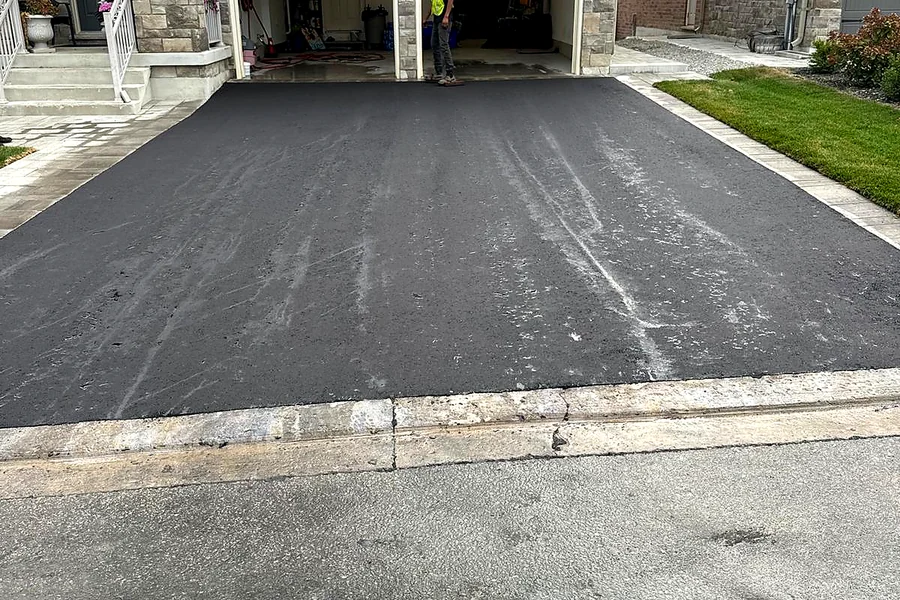
Ploughing without wrecking the surface
On asphalt: any blade is fine on a sound surface. The problem is catching an edge — a raised crack lip or a settled section will grab a steel blade and tear material out. Marking known trouble spots with stakes before the first snow saves that.
On interlock: use a rubber-edged blade or a raised shoe. Steel riding directly on pavers will catch a lip and chip the edge, and a chipped paver on a driveway is permanent unless you have spares.
Shovels do the same damage on a smaller scale. A plastic blade is gentler than a metal one on both surfaces.
Salt, sand and the alternatives
Rock salt works and is harsh on every hardscape over time. It accelerates surface scaling on concrete, and on asphalt it works into cracks and keeps water liquid where it should have frozen shut.
Sand gives traction without chemistry and is gentler on the surface — except on permeable interlock, where sand is precisely the material that clogs the joints and stops the system working.
Calcium or magnesium chloride works at lower temperatures than rock salt and less product is needed, which reduces total load on the surface.
The best strategy on any surface is to clear snow before it compacts, so you need less de-icer at all.
The one thing that matters more than any of it
Water. If your driveway holds a puddle in November, that puddle becomes an ice lens in January and a void by March. Cracks filled in autumn keep water out of the base through the entire freeze-thaw season.
A few hundred dollars of crack filling in October does more for your driveway than every winter product combined.
Questions
Will salt ruin my driveway?
Not immediately, but it shortens the life of any hardscape over years. Sand, or a chloride de-icer used sparingly, is gentler.
Can I use salt on interlock?
Yes on standard concrete pavers. Avoid sand on permeable pavers, because it clogs the joints that make them drain.
Should I seal before winter?
Sealing is best done in late spring or early fall on a cured surface. If you have visible cracks, filling them before winter matters far more than sealing.
Related
Keep reading
Free estimate
Questions about your own driveway?
We measure on site, probe the base and quote in writing within 48 hours.
Request my estimate